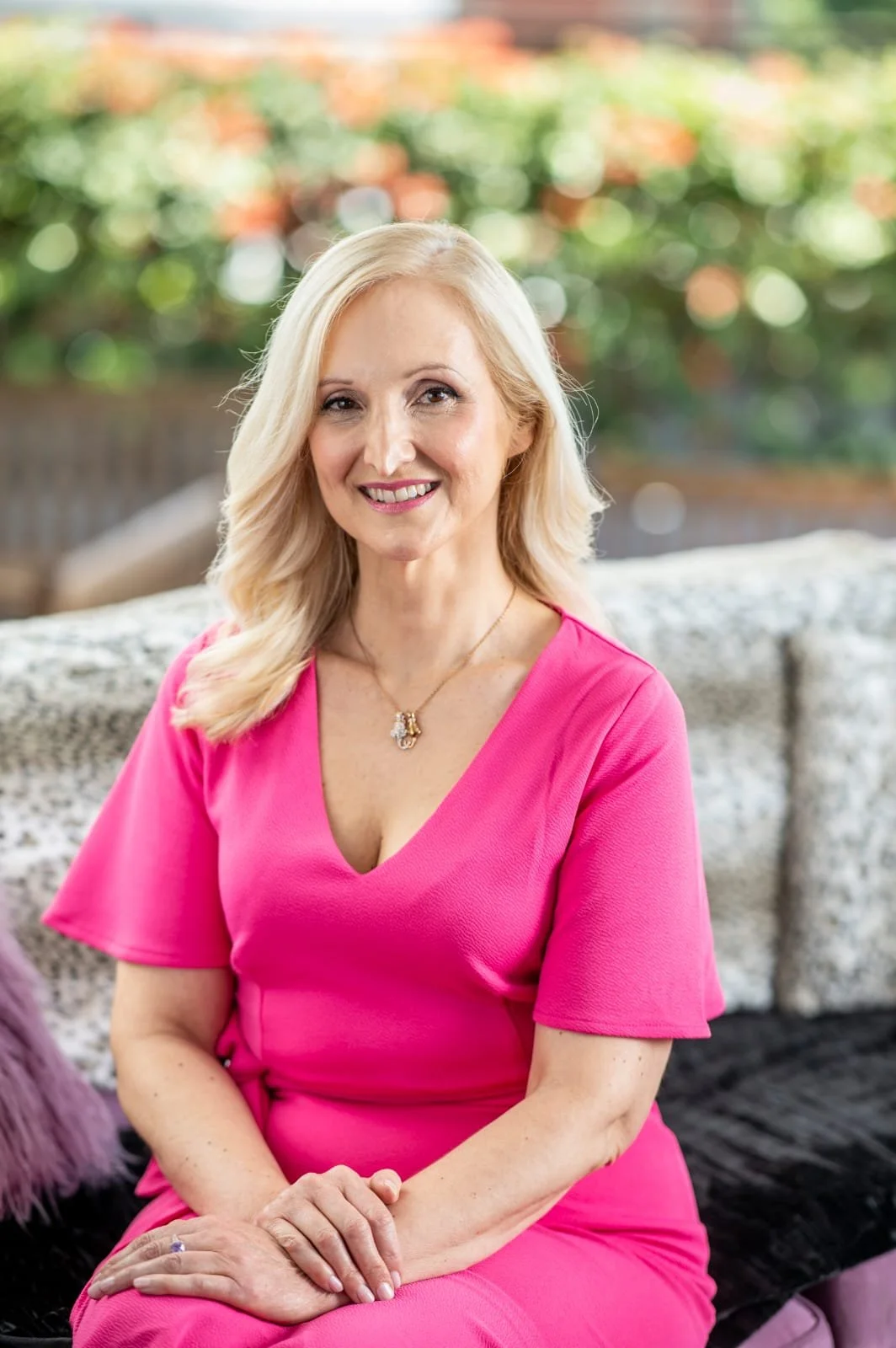
in conversation: Belinda Alexandra
What was the first story you ever told — and why did you need to tell it?
My first novel, White Gardenia, was inspired by my grandparents’ and mother’s journey from Harbin in China to Shanghai to the Philippines and then on to Sydney. They were White Russians (a term used to describe the Russians who had been on the side of the fallen Tsar). Their journey was spurred by wars and revolutions. As a child I had been enthralled by my mother’s stories of exotic places and the photograph album she had of glamorous looking relatives who had meet tragic deaths. Growing up in peaceful, sunny Australia, I had always felt different. I realised I was carrying a lot of intergenerational trauma. I wanted to write a fiction story based on my family’s epic journey so I could understand it – but also so I could take inspiration from the flip-side of intergeneration trauma, which is intergeneration strength.
Was there a moment when you almost gave up on writing?
From the time I was a child, I was storytelling and writing. It seemed to be my purpose. But that doesn’t mean the journey of being a professional writer has been easy. There have been many ups and downs. I have written under many adverse circumstances, but the only time I thought seriously about giving up was just before I sat down to write The Italian Correspondent, my latest book. I was exhausted and there were so many difficulties in the book industry that they seemed insurmountable. I wanted to stop and go back to university to study psychology instead. But something told me to keep going and to have more fun with my writing. I am glad I did, because the book is being very well received by early readers and I’m feeling joy about my writing again. I’m glad I didn’t give up.
What part of your own life quietly lives inside your characters?
I struggle along with my characters to understand the evil that exists in humanity. I think we are all feeling that to a degree right now with the constant exposure of dark acts (probably even darker than we could have imagined) by people at all levels of society. I also struggle with the callous way we treat animals, which I see as sentient beings. Yet, I am often shown examples of human beauty and acts of selflessness which restore my faith. I think that is a journey a lot of my characters take too.
If your younger self could see you now, what would she be most proud of?
I persevered when things were difficult and I have overcome a lot to create a happy life, even when it seemed impossible.
Writing can be solitary and uncertain — how did you learn to trust your voice?
The journey I made in my writing is very similar to the one many of us have made in our lives as women. We start off very sure of ourselves as young girls, then somewhere in the middle we start prioritising others and become people-pleasers and peacemakers. Then when we’ve had enough of that, we find our true voice, and we trust it because that trust has been earned. We are no longer afraid of speaking our truth.
What does success mean to you now, compared to when you first started?
Success for me now is the joy of doing something well and not even having to tell anyone about it. I’m not trying to impress anyone anymore. I’d rather impress myself.
What belief about women have you challenged through your stories?
A few, I think. My protagonists are all strong women who have well-developed relationships with other women. When I was in my twenties I was told by a German boyfriend that if I wanted to be taken seriously as a writer, I couldn’t write for a predominantly female audience. I rebelled against that idea. I love my female readers – they are intelligent, sensitive and love to be challenged and to learn. In the end, I have had the last laugh because women buy far more books than men.
Your novels centre strong women navigating complex worlds. What draws you to telling women’s stories?
I grew up around strong women who had been through a lot. Even when I was a young child, my mother took me everywhere that she went. I never had a babysitter except once for a funeral. I used to listen to her friends’ stories about their lives, and I was fascinated. I learned so much about life from those women, and I’m very grateful for all they shared with me. I have always sought out older women as mentors because I appreciate their wisdom.
How do you define feminine strength?
I believe it’s different for all of us and there isn’t one kind of woman. For some of us, being strong is being gentle and calm. For others it’s being loud and proud!
What do you think women are still unlearning?
I can’t speak for all women, but I can say for myself I’ve had to actively let go of caretaking at the expense of my own well-being. I like to say I’m in my ‘Villainess era’. I am still kind, but I’m not nice. There is a difference. You can be kind and still say ‘no’, have strong boundaries, and refuse to do for others what they can do for themselves.
What responsibility do storytellers hold when shaping how women see themselves?
I am often uncomfortable about how relationships are presented in romance novels. I know bookish heroes can be adorable, and we should be able to tell the difference between them and real-life men, but many people just can’t. I also think romance novels hold one form of love as greatly superior to all others. Love is of paramount importance, but loving our families, siblings, friends, animals, nature, life itself etc are just as important and valid as loving a romantic partner. In my novels, I try to decentre men a little and open my characters up to lots of different kinds of love besides romantic passion. My protagonists always have a deeper purpose other than simply seeking a man.
Beyond entertainment, what do you hope your work gives women?
I do like my readers to think about and consider life and the way we have been conditioned to think. I do this by sometimes challenging expectations for a protagonist.
What does joy look like in your current season of life?
I have found that if I pursue peace first, joy naturally follows. If I try to have joy without peace, the results aren’t so good. I am vigilant about keeping my nervous system calm and having practises like daily meditation. Joy then springs up spontaneously. I might be driving along or washing the dishes and suddenly I will feel a spark of light go right through me. I think they are called ‘glimmers’ and are the opposite of feelings of fear and dread.
If you could offer one sentence of permission to every woman , what would it be?
Don’t expect anyone to rescue you, or wait too long for the ‘right time’: If you want to do something, make start on it in one form or another.